An innovation for more sustainable outdoor infrastructure
Designed for outdoor wooden infrastructure such as park benches, playground modules, and other public installations, the “Pépin treatment” offers an innovative and more environmentally friendly approach than conventional methods.
Unlike traditional treatments that aim to eliminate the microorganisms responsible for degradation, this technology works by reducing wood movement, thereby limiting the formation of cracks and the conditions favourable to mold growth.
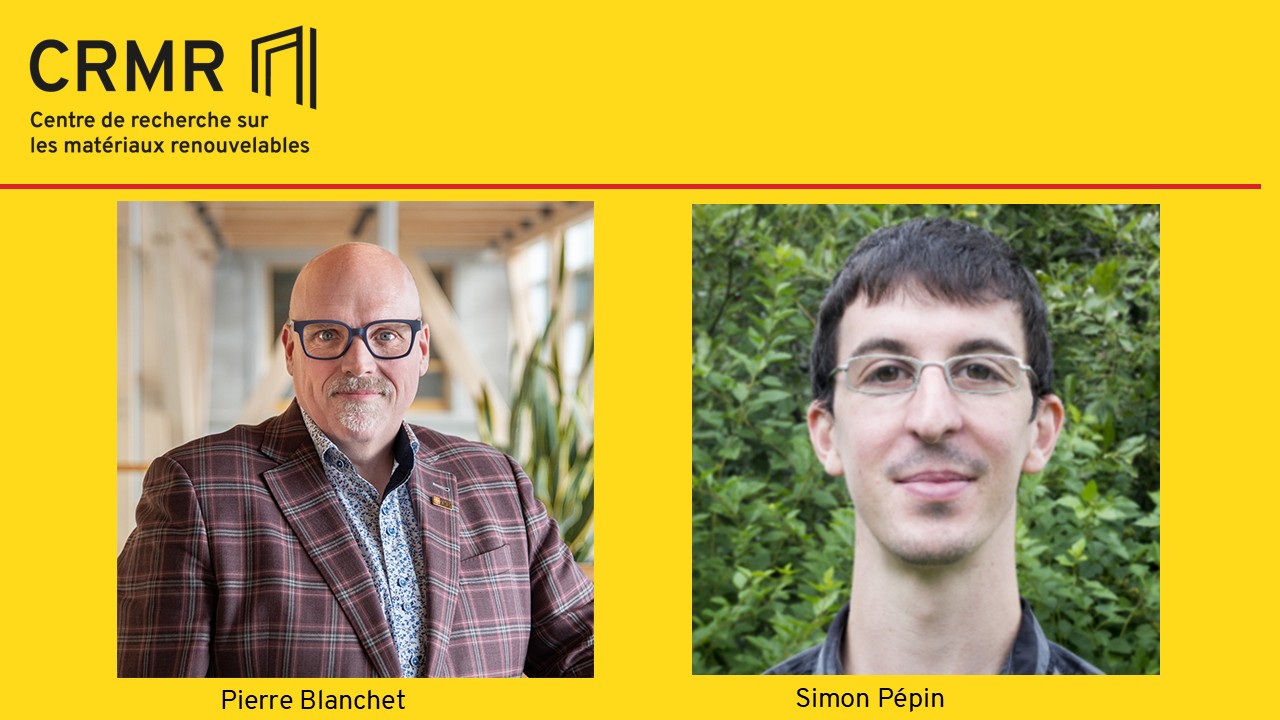
According to Professor Pierre Blanchet, this approach ensures long-lasting protection:« It protects against long-term degradation. With traditional approaches, damage still occurs, even when fungi cannot survive ».
An eco-friendly and high-performance solution
The treatment stands out for its innovative composition, made up of 97.5% water and incorporating low-toxicity compounds, including tertiary amine oxides, which are found in many everyday products such as soaps and shampoos.
These compounds bind to the chemical groups in the wood, forming a durable protection resistant to leaching. The process allows penetration of about three millimeters below the surface, without relying on energy-intensive methods such as pressure or prolonged soaking.
This technology also helps reduce the leaching of potentially harmful substances into the environment, a major concern with traditional preservation treatments.
Proven performance in the field
Tests conducted on campus and at the Montmorency Forest demonstrate the effectiveness of the treatment after several years of exposure to the elements. Treated structures show significantly less deformation and cracking than untreated wood.
These observations allow the research team to estimate an extension of the wood’s lifespan by approximately 20% to 35%. For public infrastructure managers, this improvement represents substantial savings by reducing the frequency of major repairs and replacements.
A successful transfer to industry
This innovation, now nicknamed the « Pépin treatment » in honor of its creator, is a concrete example of successful technology transfer between academia and industry.
Professor Pierre Blanchet welcomes this key milestone : « It is very rewarding to see a research result reach the market ».
Société Laurentide Inc. will oversee the commercial development of this technology, paving the way for broader use in outdoor wooden infrastructure and contributing to more sustainable practices in the sector.
The Canada Research Chair in Sustainable Buildings places technology transfer at the heart of its mission. It aims to develop and disseminate innovative solutions for more sustainable, high-performance, and environmentally friendly buildings and infrastructure.
Source