
Sustainable Building Transition 2026: Circularity at the Heart of the Discussion!
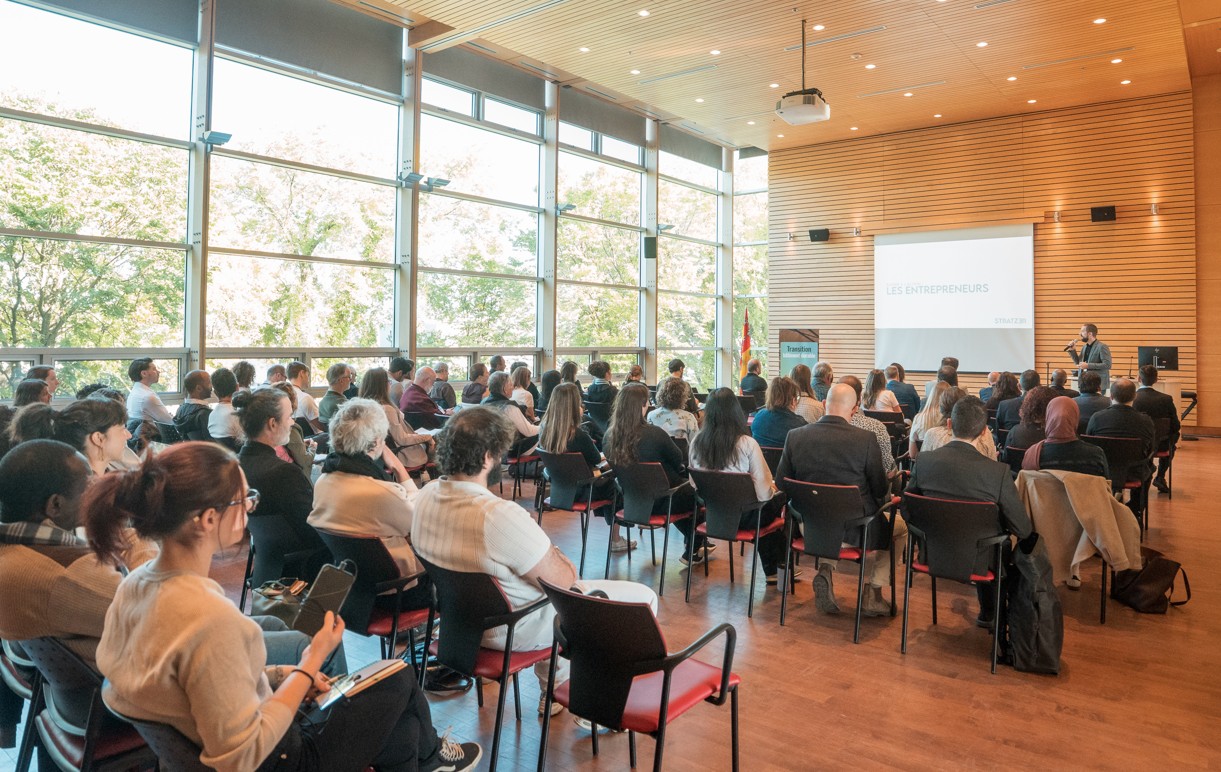
One of the event’s greatest strengths was the diversity of expertise brought together. Researchers, professionals, municipalities, public organizations, businesses, and innovation stakeholders enriched the exchanges by offering complementary perspectives. The case studies presented, including those from Hydro-Québec, the CAB Art Centre, the F.-X.-Drolet Building, and the Montmorency Forest, provided concrete examples of both the challenges and opportunities associated with the transition to a circular economy.
The panel discussion dedicated to the 3Rs (Reduce, Reuse, Recycle) was another highlight of the program. By bringing together speakers representing different links in the value chain, the panel explored the practical conditions required to implement circularity and examined the technical, economic, and organizational factors influencing its large-scale adoption.
The significant emphasis placed on research and emerging talent also deserves recognition. The lightning presentations showcased the dynamism of ongoing work on topics such as circularity assessment, bio-based materials, biophilic architecture, and the connections between land-use planning, mobility, and sustainable development. These presentations highlighted that the sector’s transition relies as much on scientific innovation as on the evolution of professional practices. A $1,000 award was presented to Rebecca Holbach, whose presentation was selected as the best by the judging committee.
A key message emerged throughout the day: circularity must be considered from the very beginning of a building’s design, not only at the time of demolition. Material selection, design, component documentation, maintenance, future adaptations, and deconstruction should all be planned from a life-cycle perspective.
Buildings can therefore be viewed as reservoirs of materials and resources whose value can be preserved over time. Rehabilitation, transformation, and reuse become strategies that complement new construction rather than replace it.
While the program showcased numerous inspiring initiatives and exemplary projects, it also raised a fundamental question: how can these practices be scaled up? Obstacles related to costs, regulatory frameworks, professional liability, the availability of reclaimed materials, traceability, certification, and logistics remain major challenges to the widespread adoption of circular practices. It is often at this stage that the difference between a successful pilot project and a true sector-wide transformation becomes apparent. The discussions surrounding these issues were therefore especially important in advancing solutions and encouraging their broader implementation.
Conclusion
Sustainable Building Transition 2026 served as a valuable opportunity to bring together research, professional practice, and the construction sector’s transformation needs. By approaching circularity from multiple perspectives, the event contributed to reshaping how buildings and materials are viewed, while raising a fundamental question for Québec’s future:
How can we move from a waste-management mindset to a genuine strategy for conserving and maximizing the value of resources throughout the entire life cycle of the built environment?
This reflection, encompassing technical, economic, and societal dimensions, is poised to play a defining role in the transition toward a more sustainable, resilient, and circular built environment.
For more information: Bâtiment durable Québec