
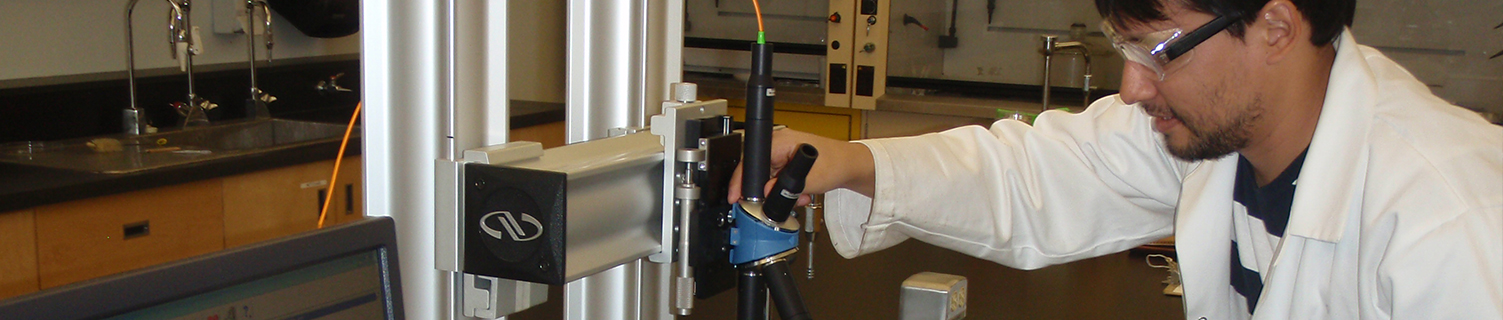
Jeremy Michael Piggot Navarrete wins the CRMR Autumn 2025 Support Scholarship, valued at $5,000!
Congratulations to Jeremy Michael Piggot Navarrete, recipient of the CRMR Autumn 2025 Support Scholarship from the the Renewable Materials Research Center (CRMR)! Jeremy is pursuing a PhD in Wood Engineering and Bio-based Materials under the supervision of Pierre Blanchet.
This scholarship aims to promote university studies and research aligned with the CRMR’s focus areas by providing financial support to a master’s or doctoral student in the final stages of their program who lacks other funding sources. Jeremy’s application stood out due to his exceptional academic results, scientific and personal achievements, as well as the quality and progress of his research project.
Congratulations to Jeremy on this outstanding achievement! Many thanks also to the committee for their commitment and support throughout this process!

Project Description: Energy Efficiency Considerations Related to the Quality of Building Envelope in Prefabricated Systems
The building sector plays a central role in global energy consumption and greenhouse gas emissions, representing a significant share of energy use and overall emissions. In Quebec, the situation is similar, and energy efficiency in residential buildings is a major issue in addressing climate change.
In this context, the building envelope (walls, floors, and roofs), which serves as the interface between the interior and the exterior, is a key element determining hygrothermal performance. This performance is defined by the envelope’s ability to limit heat losses, moisture accumulation, and air infiltration, thereby reducing energy consumption through appropriate design and construction. However, traditional construction methods often face limitations due to unforeseen events and site complexities, which can compromise assembly quality and result in significant energy losses.
Prefabricated wood panel walls (PPMB) emerge as a promising solution. Manufactured in a controlled factory environment, they allow for superior quality control and are expected to provide better performance than traditional systems. However, their actual effectiveness remains poorly documented, particularly regarding panel joints, which can be vulnerable to heat losses and air infiltration.
The issue addressed in this thesis lies in the need to understand and quantify the impact of prefabricated systems — especially their joints — on the hygrothermal and energy performance of buildings, as well as their adaptability to climate change. The main objective is to analyze the influence of PPMB on the hygrothermal and energy performance of buildings compared to traditional systems, under current and future climate conditions.
Methodology
The methodology was structured around three main steps, each associated with a specific objective:
-
Evaluation of Traditional Systems
The hygrothermal performance of conventional wood envelopes was studied to establish a reference. Full-scale laboratory tests were conducted to measure heat transfer, moisture, and air infiltration. -
Evaluation of PPMB
Various types of prefabricated walls were tested using a similar methodology, including some models incorporating bio-based insulation. Particular attention was paid to the performance of panel joints. -
Energy Analysis
Energy simulations were conducted on a residential building, integrating climate projections from the Intergovernmental Panel on Climate Change (IPCC). These simulations allowed for a comparison of the energy demand of buildings constructed with traditional systems versus prefabricated envelopes under current conditions and future horizons (2050 and 2080).
Results
The results show that prefabricated systems offer significantly better performance than traditional solutions. They provide improved resistance to heat loss, enhanced airtightness, and more stable moisture behavior. Energy simulations also indicate that buildings equipped with PPMB require less energy for heating and cooling, and this performance is maintained even under future climate scenarios.
Wood prefabrication thus appears as an effective means to improve building energy efficiency and comfort, while offering a durable and adaptable solution to environmental challenges.
Outcomes and Applications
The project has multiple outcomes. Scientifically, it contributes to improving the design of prefabricated systems by providing concrete data on their hygrothermal and energy performance. It also encourages the adoption of construction solutions that are more resilient to climatic variations, especially in regions with harsh winters and increasingly hot summers.
Finally, the project highlights the potential of bio-based materials, such as hemp fiber, to enhance the hygrothermal regulation of envelopes. For the industry, these results represent an opportunity to develop more sustainable, competitive construction solutions aligned with greenhouse gas reduction policies.