
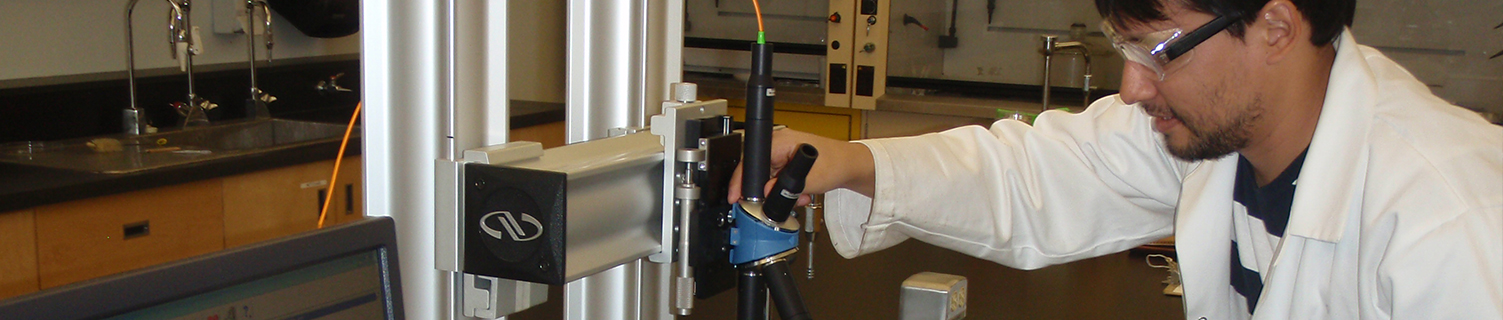
Congratulations to Jinxing Li on his successful PhD defense!
Congratulations to Jinxing Li, who brilliantly defended his doctoral thesis in Wood and Bio-based Materials Engineering this Tuesday, September 24, 2025!
Under the supervision of Tatjana Stevanovic and Xiaodong Wang, his innovative work led to the development of bio-based, wood fiber-reinforced foams made from tannin and starch, offering an eco-friendly alternative to traditional insulating materials. By developing formulations incorporating bio-based crosslinking agents and specific treatments, he succeeded in significantly improving thermal insulation, mechanical strength, fire resistance, and hydrophobicity. These advancements pave the way for designing sustainable and high-performance insulating materials for the construction sector.
Well done, Jinxing Li! This achievement marks a major milestone in an already impressive journey filled with accomplishments and inspiring contributions to the field of sustainable materials.
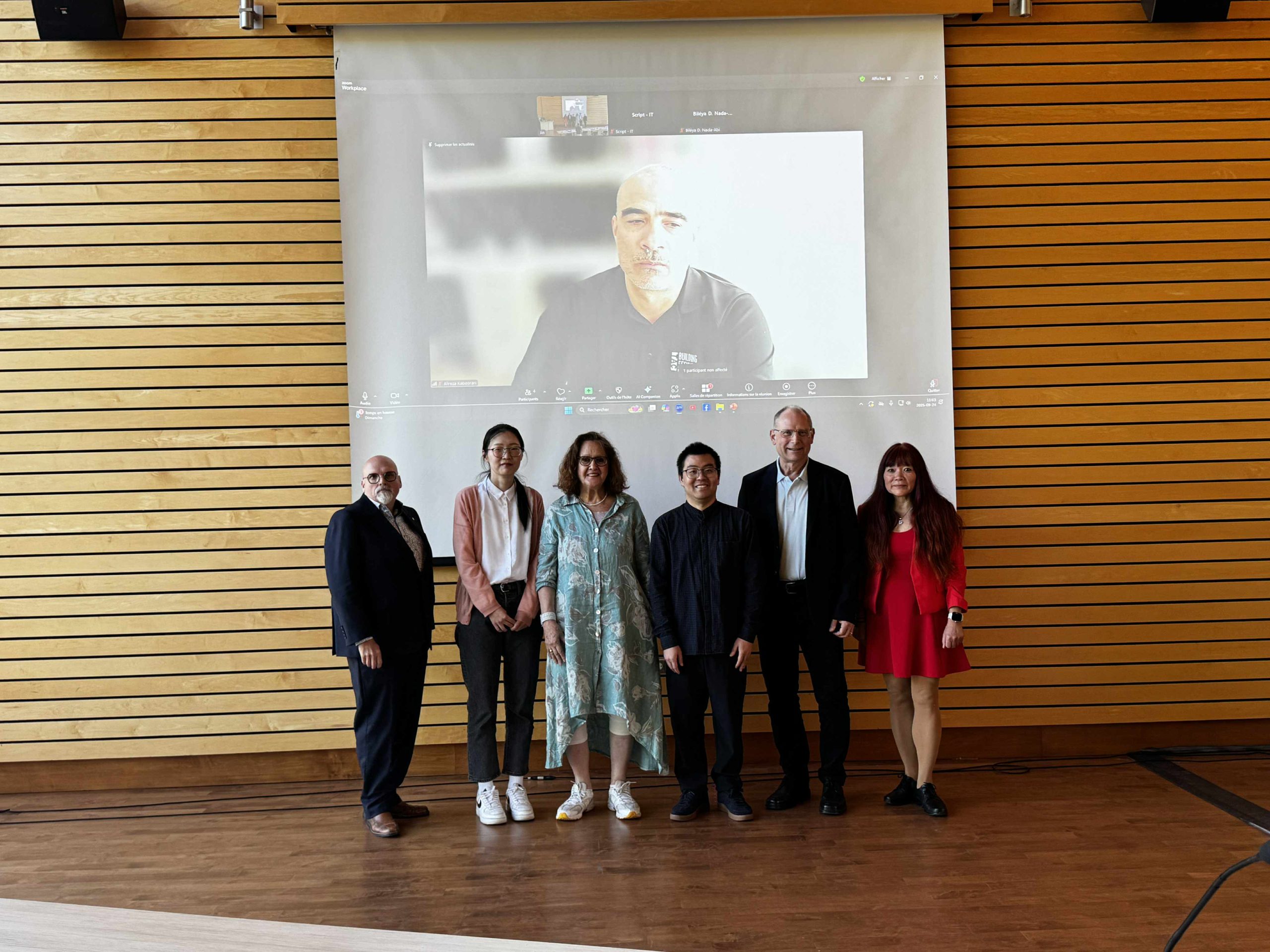
The members of the jury were:
-
Chair: Pierre Blanchet – Faculty of Forestry, Geography and Geomatics, Laval University
-
Supervisor: Tatjana Stevanovic – Faculty of Forestry, Geography and Geomatics, Laval University
-
Co-supervisor: Xiaodong Wang – University of Quebec at Rimouski
-
Laval University Examiner: Alain Cloutier – Faculty of Forestry, Geography and Geomatics, Laval University
-
Examiner: Chen Qian – FPInnovations
-
External Examiner: Alireza Kaboorani – RRC College
Thesis title: Development and modification of wood fiber reinforced bio-based foam composites for building envelopes
Résumé : In recent years, the construction industry has faced challenges such as high energy consumption, severe construction waste pollution, and depleted petroleum resources. Biomass-based insulation materials have become a viable alternative to traditional petroleum-based materials. While tannin and starch-based foams have attracted attention for their excellent thermal insulation properties, they still face challenges such as environmental friendliness, poor mechanical properties, fire resistance, and insufficient hydrophobicity, hindering their widespread application. This study focused on developing green, high-performance building insulation materials based on two biomass-based foams: tannin and starch. First, bio-based aldehydes (furfural and vanillin) were used to replace traditional petroleum-based crosslinkers. These foams were then reacted with tannic acid and furfuryl alcohol to produce foams. Wood fiber was then added for reinforcement. The resulting foams exhibited excellent thermal insulation, flame retardancy, mechanical properties, and environmental friendliness. Second, aldehyde-free tannin foams were prepared by incorporating bio-based crosslinkers such as soy protein isolate and casein. These foams also achieved high biomass content (over 95 %) and excellent overall performance. Finally, starch foams with excellent performance were prepared using oxidized starch, furfuryl alcohol, and soy protein as raw materials, combining chemical foaming, mechanical mixing, and solvent exchange techniques. By adding birch fiber, a bio-based flame retardant, and a hydrophobic treatment, the foam’s mechanical strength, flame retardancy, hydrophobicity, and thermal stability were significantly improved. In summary, this research has successfully developed a variety of green, high-performance tannin and starch-based foam materials, providing an effective path for the sustainable development of building insulation materials.