
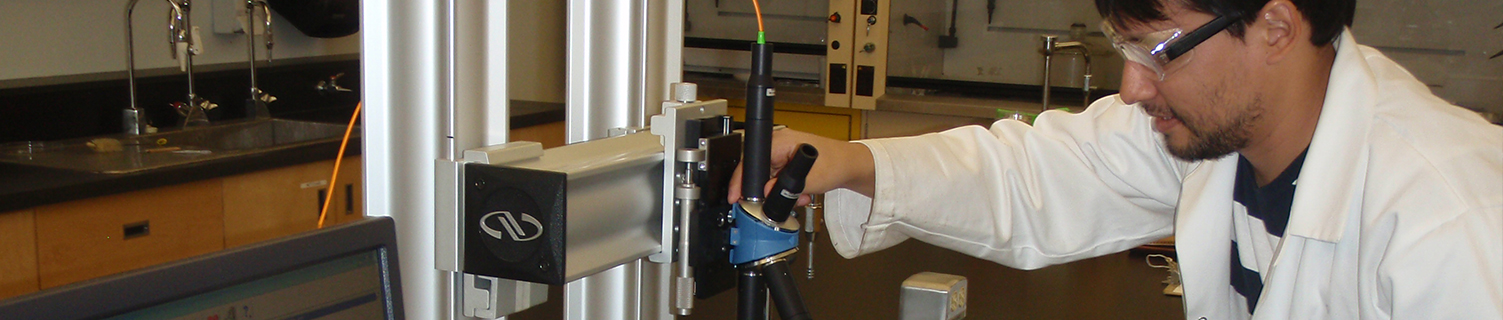
Congratulations to Alexandre Morin-Bernard, recipient of the Teaching Award – Faculty Track of the FFGG!
 Congratulations to Alexandre Morin-Bernard, Assistant Professor in the Department of Wood and Forest Sciences and researcher at the CRMR, winner of the Teaching Award – Faculty Track of the Faculty of Forestry, Geography, and Geomatics (FFGG).
This prestigious distinction highlights his outstanding commitment to teaching, his ability to spark intellectual curiosity and engage students, as well as his deep desire to share his knowledge with rigour, passion, and accessibility across all levels of study. Through his dynamic and innovative pedagogical approach, he actively contributes to training a competent, critical, and engaged next generation.
The award ceremony took place on Wednesday, March 25, 2026, during the Faculty’s Scholarships and Awards Ceremony, which brought together over 160 participants, including students, faculty members, donors, and partners.
This significant moment in faculty life celebrated the excellence, dedication, and exceptional contributions of the university community.
The Teaching Award is presented annually based on student recommendations. It rotates among the three departments of the FFGG, recognizing, in turn, the pedagogical excellence and dedication of faculty members in each of the Faculty’s fields. This recognition reflects the direct and significant impact of teaching practices on the student experience.
We warmly congratulate Alexandre Morin-Bernard for this well-deserved honour. His commitment to teaching and research brings distinction to the FFGG and inspires the entire university community.
——————————————
Alexandre Morin-Bernard’s research focuses on the remote sensing of forest ecosystems. He integrates advanced tools such as satellite imagery, LiDAR, and dendrochronological data to analyze forest growth and their responses to climate disturbances.
His work stands out through the development of multi-scale approaches, combining forest inventories, tree-ring analysis, and time-series imagery. These methods allow for precise assessment of forest conditions and better anticipation of their evolution in the context of climate change.